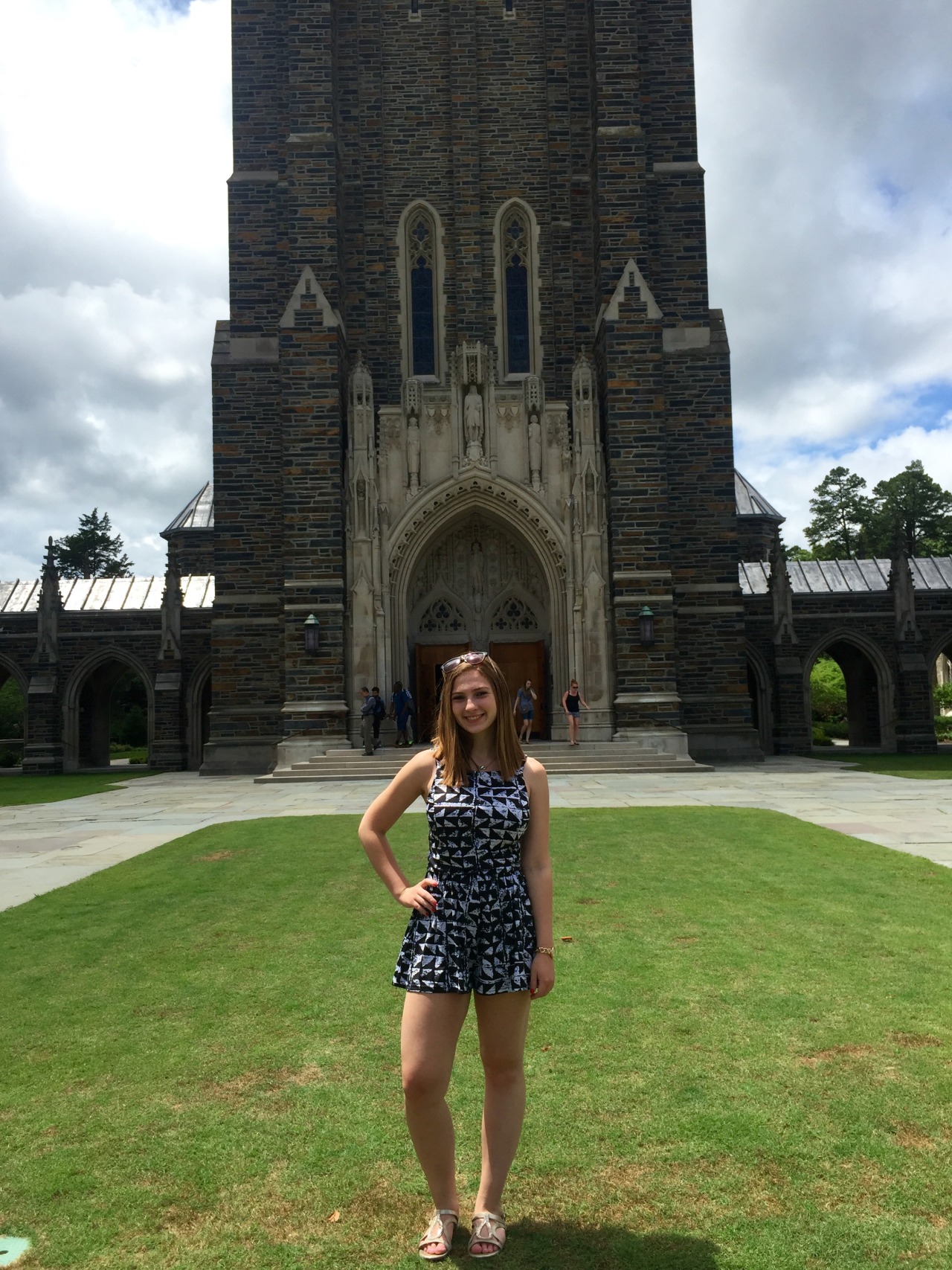
From here on out, you can find our student blogs at https://medium.com/@dukestudents. We’ll keep our Tumblr live so you can see old posts, but we’re excited to be moving student stories to Medium. We hope you’ll follow along there, and be sure to follow us on our other social media accounts as well!
There are so many different things Duke Students do outside of class!
For example:
▪️ Extracurricular activities
Clubs, volunteering, research, etc.
▪️Sports!
We have gyms both on West and East Campus, as well as a small gym on Central Campus. Some do weight training, group classes, rock climbing in the gym, some enjoy being a part of a sport club. For instance, I do figure skating.
▪️ Breakfast/lunch/dinner with friends
….and then you end up talking for two hours in the Marketplace or West Union.
▪️ Homework, of course.
Studying can also be fun if you get creative with it. Some students like to stay in the library on a quiet floor, some study in the common room in their dorms, others go to coffee shops both on campus and in Durham.
▪️ Exploring the city!
There is a mall calles Southpoint which is great for shopping and there is a cinema too. Durham has a lot of interesting places for different types of people.
▪️ Hanging out in the dorm.
Especially when you’re a freshman, you get a very tight community of people in your dorm so students play ping pong, watch movies, work on projects, cook dinner, etc.
▪️ Attending events on campus.
We have something happening every day!
If there’s anything you would like to know, feel free to ask a question on here!
Welcome to our Tumblr page. DukeStudents is a very special place that creates and shares content by Duke Students for prospective students, current students, alumni, families, very curious pets, and pretty much anyone who is interested in our lives, both inside and outside of the classroom!
We have accounts on Instagram, Twitter, Snapchat, Facebook, YouTube and we would love to have an active Tumblr this year.
We would like to hear your suggestions! Ideas for blogposts? Questions? Anything you would like to read about or see (more Chapel pics…?) ? Our inbox is open!
And of course follow us to keep updated about our creative endeavors here this year :)
Lifeguarding is great. So is being a camp counselor, babysitting your neighbor’s kids, or sleeping until three before watching Netflix for the next ten hours or so. But at Duke, there are too many amazing summer opportunities for you to not at least consider venturing outside your binge-watching cave.
There’s something for every type of student. Like travelling? Duke can take you abroad. Want to do something in a local community? There’s something for that. Just want to hang in Durham? They can help you do that, too.
You only get three summers during your time at Duke (four if you do a pre-orientation program - highly recommend!). With so many options, you’ve got to make each one count. See what might be the best option for you by takingthis fun quiz.
To see more of Duke’s (endless) summer possibilities, check out this link.
Although the question “Why Duke?” has been seen on the application to the college itself, I have thought about it many times since I have been here. Truly, the answer lies in not only what Duke offers me, but every student. Everyone is given the same opportunities here, no matter race, ethnicity, gender, religion, sexuality, and more. The programs and connections that Duke offers are incredible and unmatchable when it comes to any other school. You can also always find someone to help you, whether it be a faculty member or a student, when in a time of need. Students are super collaborative and, in all honesty, not cutthroat. Duke students pride themselves on achieving greatness, but collectively. We all want each other to succeed, and I think that’s a big part of the “Duke Difference.”
When I was a high school senior, my “Why [insert school name here]?” essay was easiest for Duke. I was by no means decided—I applied regular decision and wasn’t quite sure what I was going to study in undergrad. Despite that, something about Duke seemed to click for me. The university was dedicated to “knowledge in the service of society” and developing global citizens, and I spent most of my weeks volunteering and wanted nothing more than to study abroad. I didn’t know all that Duke had to offer, and I had no idea I’d end up there a year from writing that essay, but I knew that it was a place where my interests and values fit.
Flash forward three years to my current status as a second-semester junior, and I can’t help but laugh when I think about that application. I found it recently while cleaning up old files on my computer, and was happily surprised to see that the things I shared in my “Why Duke” essay are all things I’ve done. I wanted to volunteer, explore Durham, study abroad, and take advantage of Duke’s professors and academic resources. Over the last three years, those wishes have turned into researching side-by-side with graduate students and PhDs, volunteering in Durham, NC and Durham, UK through DukeEngage, taking unique classes (like a writing class on gender in Disney films and analyzing the psychology of business), and studying in Spain for an entire semester. I’ve been able to turn my interdisciplinary interests into an academic curriculum that has launched my professional future—something I didn’t find elsewhere.
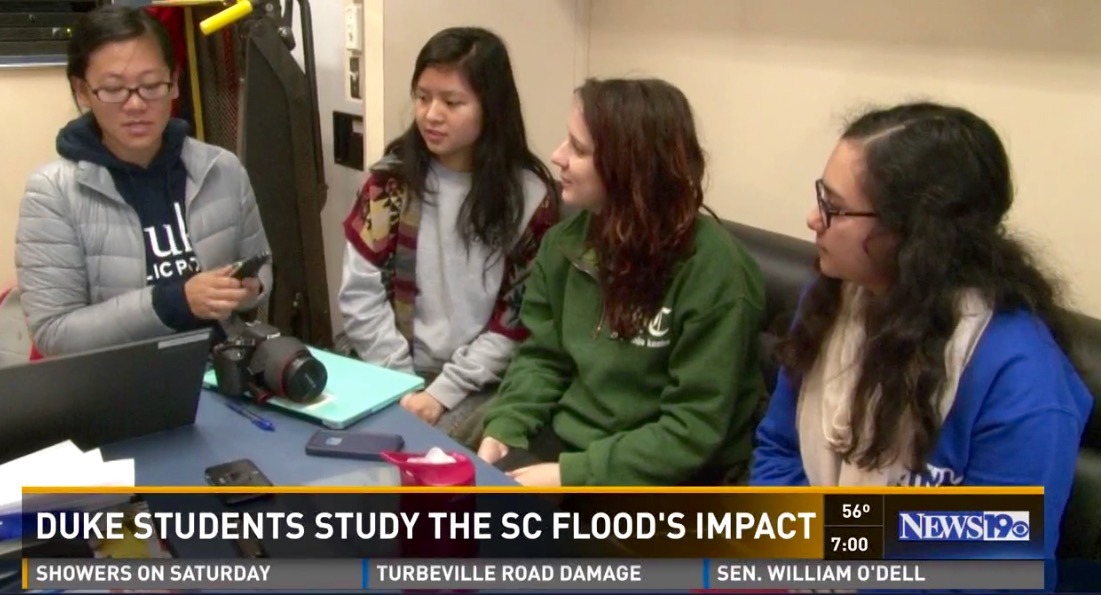
Feeling ~famous~ during my Bass Connections research on the economic and psychological impacts of flooding on South Carolina communities.
The first few weeks of college can be overwhelming. You’re navigating campus, going to class for the first time, and going through a mad dash to find your future best friends. On top of that, you have about ten thousand clubs screaming at you on the lawn as they try to get you to sign up for their listserv (which you probably do, and for the rest of your college experience you get emails from the Association of Women Surgeons even though the thought of blood makes you cringe).
Duke’s no different. From fun, stress-free activities to research projects that lead to careers, the range of opportunities in Duke Groups are endless. With over 400 clubs, it may seem like you’ll never find out where you belong.
But worry no more! Finding your place is than you think. And with this quiz, it’s even easier. Answer a few questions to see just a *small* glimpse of the endless options that are out there.
Note: There are way more organizations at Duke than could ever fit into a simple quiz. Feel free to take this seriously, or feel free to laugh and share with your friends so they can make fun of how wrong your answer is. (Then check out this linkto see all the other cool groups that you could join instead.)
One word: aesthetic. On
this website, it’s the first thing you’ll notice. Crisp and intriguing words
like incandescent and spectrum hover next to pictures full of
light and life and color. You catch the first few lines of each story beneath
the photo: some about stars, some about football, another about the “particular aroma of burning books” in the
library walls. Scroll to the bottom and you’ll find this mantra, the same on
every page: Your university. Your time. Your experience.
So what is this
website, full of stories and
pictures and perfect fonts? It’s Re Mind,
yet another one of Duke’s hidden gems.
In this series on Duke’s
lesser known groups, we’ve gotten to know two groups so far: Coven Magazine and Krav Maga, an Israeli martial arts club. This week, we’re
shifting the focus toward something a little calmer than weekly battles on the
mat: a multimedia publication dedicated to creating a sense of authenticity on
Duke’s campus.
Through their digital
publication, Re Mind is addressing
something that we’re all too familiar with: feigned perfection. Duke sophomores
Rachel Lau and Michelle Liu started Re
Mind to publish pieces that counter the image that dominates social media -
one where students defined by the social groups that they picture themselves
with. Once the two connected last summer and realized how similarly they felt,
they realized others must feel the same.
Recently, I had the chance
to hear from Lau, who told me all about the amazing way that Re Mind is shifting this all-too-perfect
narrative through their online publication. Here’s what she had to say.